The little girl in me always wanted to uncover stories.
When I was little, my family took a holiday to Mount Gambier and Naracoorte in South Australia. Something changed in me there. I became completely captivated by history. Not just fossils or ancient bones, but by the stories they represented. I was fascinated that something could remain hidden for hundreds, even thousands of years, waiting for someone to uncover it. That ordinary lives could leave behind traces for future generations to find.
From that moment on, I wanted to become an archaeologist. As I grew older, that curiosity only deepened. Alongside my love of history, another passion quietly flourished. Art. Throughout high school I immersed myself in painting, drawing and creating. It became another way of understanding the world around me, and after finishing school I began studying art at university before eventually following the path that had called to me for so many years and changing my degree to archaeology.
Looking back now, I realise those two worlds were never all that different. Both were ways of observing. Both asked me to slow down. Both taught me that beauty often lives in the details. Studying archaeology eventually took me far beyond the classroom.
I travelled with Jess through England and Europe, wandering museums I'd dreamed about since I was a little girl, standing before the works of artists I'd only ever seen in books, and walking streets where history seemed to linger around every corner. I remember standing quietly in those galleries and museums, surrounded by paintings, sculptures, journals and everyday objects that had survived centuries. None of them were extraordinary because they were perfect. They were extraordinary because someone had chosen to preserve them.
It made me wonder... What stories are we leaving behind?
Not just the great historical moments, but the ordinary ones.
The muddy feet after a day outside. The flour-covered kitchen bench. The way a nana reaches for a tiny hand. The laughter around a campfire. The tired cuddle at the end of a long day. The things that seem so ordinary now, yet become priceless with time.
Somewhere along the way, after my kids were born, photography quietly found me. At first, I thought it was a different path entirely. But over time I realised it wasn't a replacement for archaeology. It was simply another way of preserving history.
Not history written in textbooks, but the kind that lives within families, communities and the everyday moments that shape who we are.
When I photograph a mother feeding her baby, children running barefoot through red dirt, a family gathered around the dinner table, or generations standing together at a country rodeo, I don't just see a photograph. I see an artefact. A small piece of someone's story. Something that one day may be held by children, grandchildren or generations yet to come, offering a glimpse into who they were and how they lived.
Sometimes people ask if I ever regret not becoming an archaeologist. The truth is... I don't think I ever stopped being one.
I still spend my days searching for stories. They're just not buried beneath the earth anymore.
They're found in hospital rooms and home kitchens. Along riverbanks and beaches. Beneath the water's surface. In dusty rodeo arenas. Around picnic rugs filled with mothers. In weathered hands, sleepy newborns and the beautifully ordinary moments that so often pass unnoticed.
Photography simply became my trowel.
Every frame is a small excavation of the life we're living right now. Because one day, these ordinary moments will become history. And perhaps that's what Echoes of Us has always been.
A growing collection of the stories we leave behind.
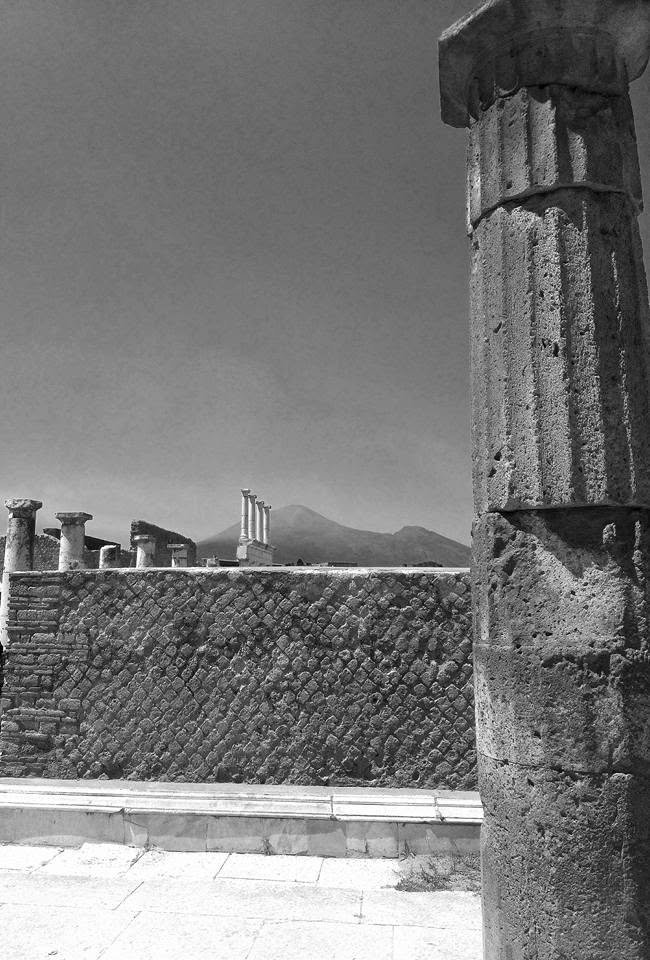
Photograph taken in Pompeii, Italy. Jess and I spent 4 days exploring the once buried city.